
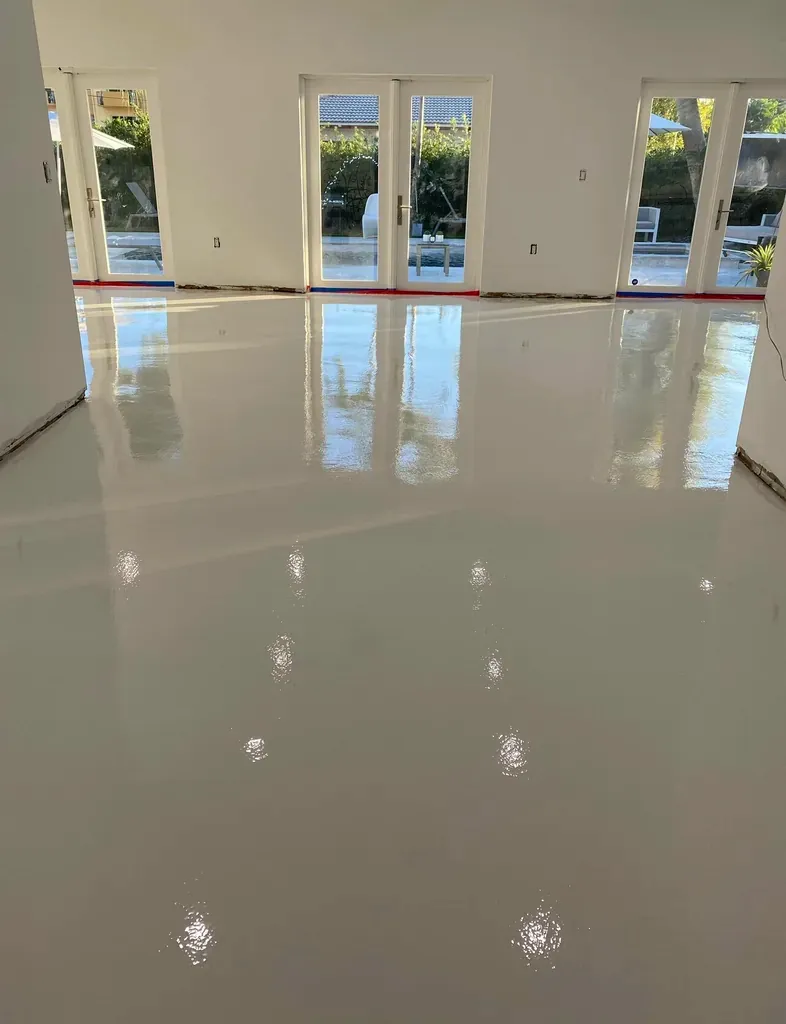
Epoxy Flooring
The base system: a poured resin layer that seals the slab and gives you a seamless, easy-to-clean surface with no grout lines to scrub.
Floor line marking
Safety lanes, pedestrian walkways, parking stalls, storage areas and work zones marked in epoxy or traffic coating for warehouses, shops, parking garages and industrial floors across Florida.
Floor line marking is painting permanent lines on a concrete or epoxy floor to organize traffic and mark hazards. We start with a layout: together with you, we define the forklift lanes, pedestrian walkways, storage areas, loading zones and anything that needs to stay clear, such as electrical panels, fire equipment and exits. Then we prepare the surface where each line goes, because a line painted over dust or a glossy floor without preparation peels in weeks under forklifts. We snap and mask every line so the edges come out straight and clean, and apply the marking in epoxy or a traffic coating, chosen for the traffic and the cleaning the floor gets. Lines are left to cure before the area goes back into service. Striping can be done on its own or as the last step of a new epoxy floor, so the floor goes back into use already marked.
OSHA requires permanent aisles and passageways in workplaces to be kept clear and appropriately marked, and its safety color code uses red for fire protection equipment and danger and yellow for caution and physical hazards. OSHA does not assign a color to every type of floor line.
Beyond red and yellow, most facilities follow an industry convention: yellow for aisles and traffic lanes, white for equipment and fixtures, green for materials and finished goods, blue for raw materials or work in progress, and red for defects or scrap. What matters is that the plant uses one scheme consistently. We help you define it before we paint.
Floor tape is quick and works for temporary layouts, but it lifts at the edges under forklifts and has to be replaced often. Painted lines in epoxy or a traffic coating are bonded to the floor, so they take forklift traffic, pallet jacks and cleaning much better. Epoxy suits interior warehouse and shop floors; traffic coatings suit parking garages and areas with tires and water.
On an existing floor, we mark over the current surface after preparing the areas where the lines go. When we install a new epoxy floor, the lines go on as the last step of the same job, so there is only one shutdown. In both cases we can work in sections and outside business hours so the operation keeps moving.
We work across Florida from our base in Weston. These cities have their own page:
The base system: a poured resin layer that seals the slab and gives you a seamless, easy-to-clean surface with no grout lines to scrub.
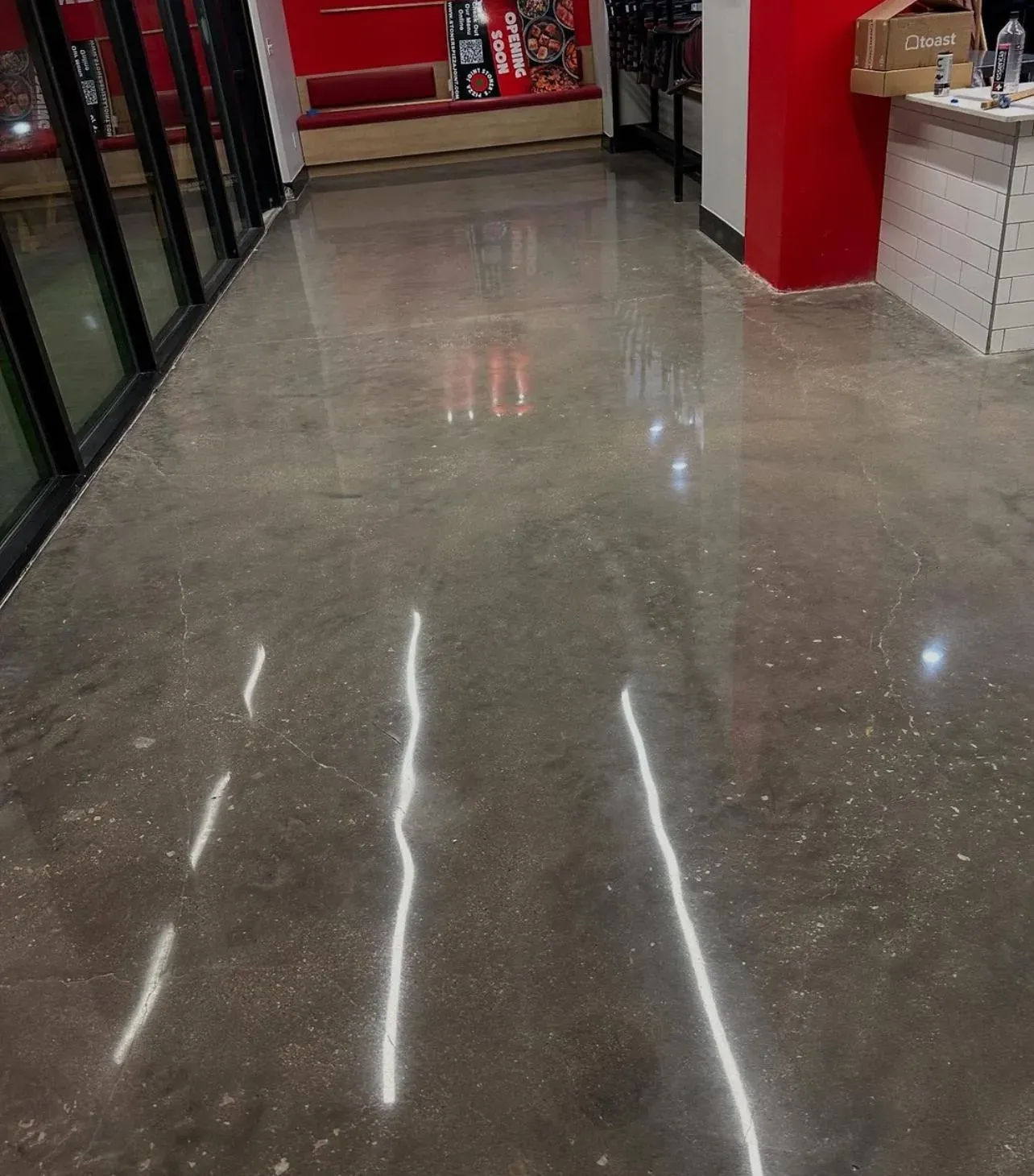
Mechanically refining the slab you already have through progressive diamond grits. No coating on top — the finish is the concrete itself.
OSHA uses red for fire equipment and danger and yellow for caution. For the rest, most facilities use yellow for aisles, white for equipment, green for finished goods, blue for raw materials and red for scrap. The key is one scheme used consistently.
Yes, when the surface is prepared and the line is applied in epoxy or a traffic coating. Tape and paint over an unprepared floor are what wear out and peel.
Yes. We work in sections and outside business hours, and each area goes back into service once the lines have cured.
Yes: stalls, arrows, numbers, walkways and no-parking zones, in a traffic coating built for tires and water.

Send us a plan or photos of the floor and tell us how the space works. We visit, lay out the lines with you and give you a written quote before anything is scheduled.