
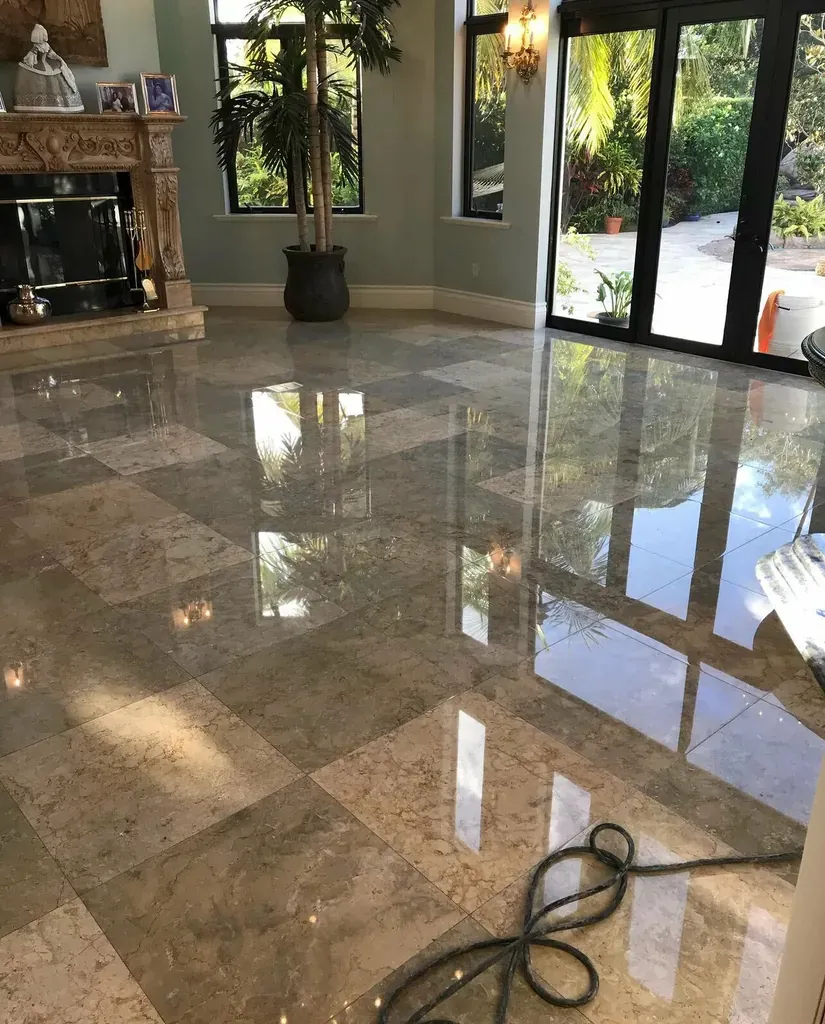
Marble Floor Polishing
Diamond honing and polishing that brings dull, scratched marble back without replacing a single tile.
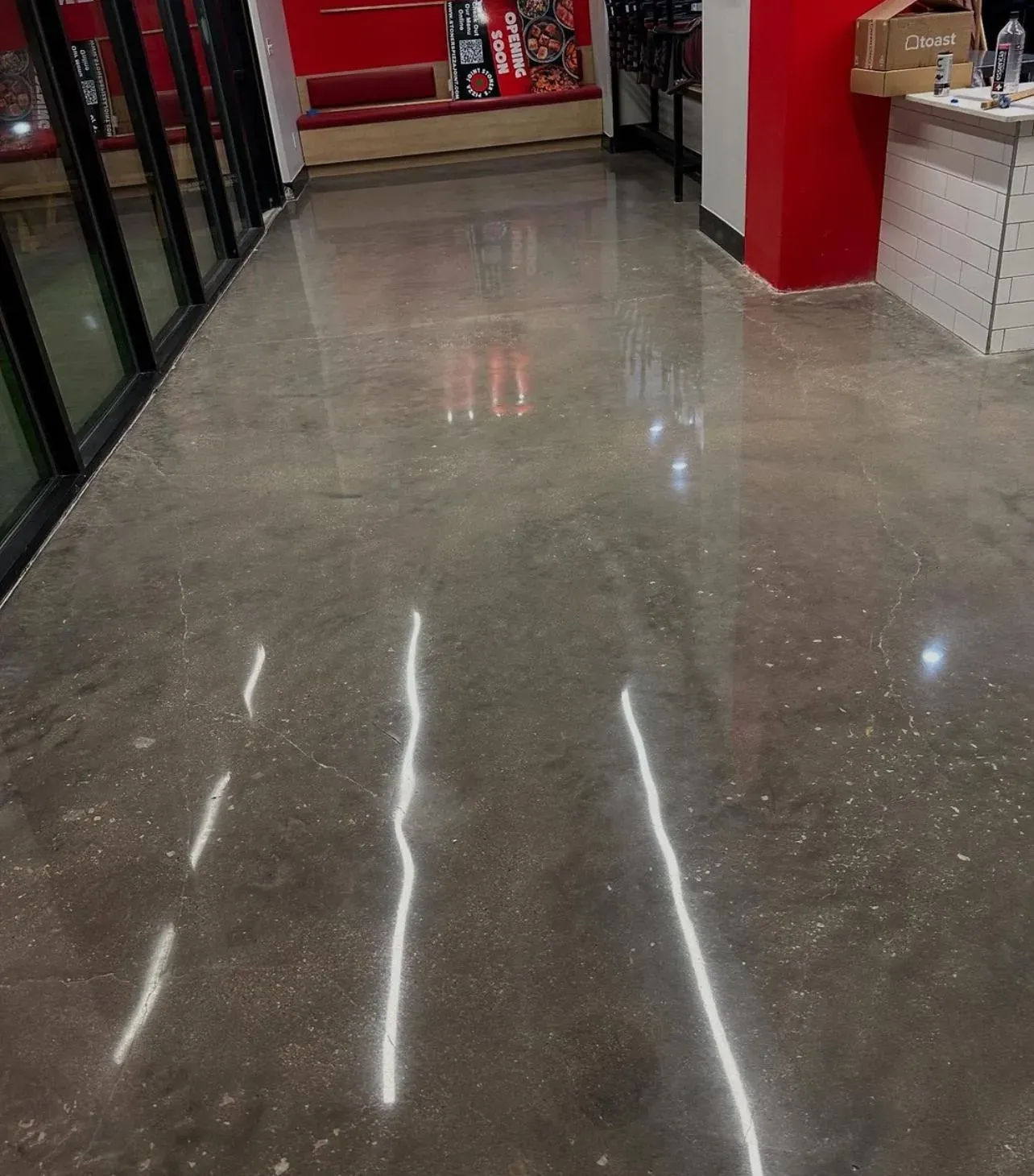
Concrete polishing
We grind and polish the concrete you already have until it shines. No coating on top. For warehouses, restaurants, showrooms and homes across Florida, from about $3 to $12 per sq ft, estimated.
Concrete polishing is a mechanical process: we grind the slab with diamond tooling, from coarse to fine, until the surface is flat, dense and reflective. First comes grinding, which removes old coatings, glue and the weak top layer and sets how much of the stone inside the concrete will show. Then we apply a densifier, a liquid that soaks into the concrete and hardens it from within. After that come the polishing passes with finer diamonds, each one raising the shine a step, and a stain guard that helps the floor resist oil, wine and coffee. Nothing is laid on top that can peel, because the finish is the slab itself. The result depends on two choices you make with us before we start: how much aggregate you want exposed and how much sheen you want. Those two choices, plus the condition of the slab, are what move the price between about $3 and $12 per square foot, estimated.
A coating, such as epoxy, is a new layer that covers the slab: it can add color, flakes or a metallic look, and it hides the concrete. Polished concrete keeps the concrete as it is and brings it to a shine, so what you see is the slab, with its tones and its stone.
Polishing suits spaces with heavy traffic where you do not want anything on top that can peel: warehouses, restaurants, stores and showrooms. A coating is the better call when the slab is badly damaged, when you want a color that concrete does not have, or when the floor needs chemical resistance. If you are not sure, we look at the slab and tell you which of the two makes sense.
Two decisions define a polished floor, and they are made before the first pass because they set how deep we grind.
The first is aggregate exposure, meaning how much of the stone inside the concrete shows:
The second decision is sheen. More shine means more polishing passes. High gloss reflects light and makes a space look larger; satin hides wear better in areas with heavy traffic; matte gives a quiet, natural look.
Not every slab can be polished. If the concrete is badly cracked, patched in many places or too soft, polishing only makes the damage more visible. In those cases we use microtopping: a thin cementitious layer that resurfaces the slab and leaves a smooth, modern finish. It also goes on stairs, walls and countertops.
Polished concrete is one of the easiest floors to maintain: a dust mop and a pH-neutral cleaner are enough day to day. Acidic cleaners and harsh chemicals dull the shine. In spaces with heavy traffic the shine can be brought back with a new polishing pass, without redoing the floor.
$3 – $12
per square foot, estimated
The range depends on the finish you choose: more aggregate exposure and more shine mean more passes.
What moves the number
Estimated ranges
| Polished concrete | $3 – $12 / sq ft |
|---|
These are estimates. The final price requires a prior evaluation and a quote.
Get a free on-site estimateReal jobs, photographed on site. No stock photos, no renders.
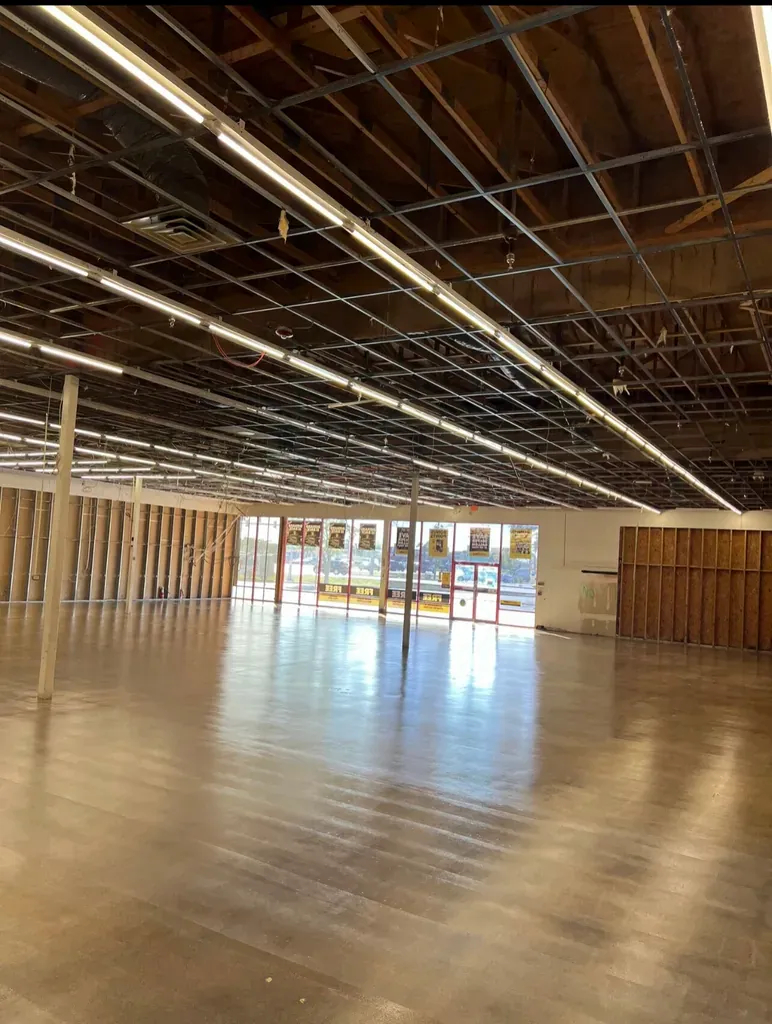
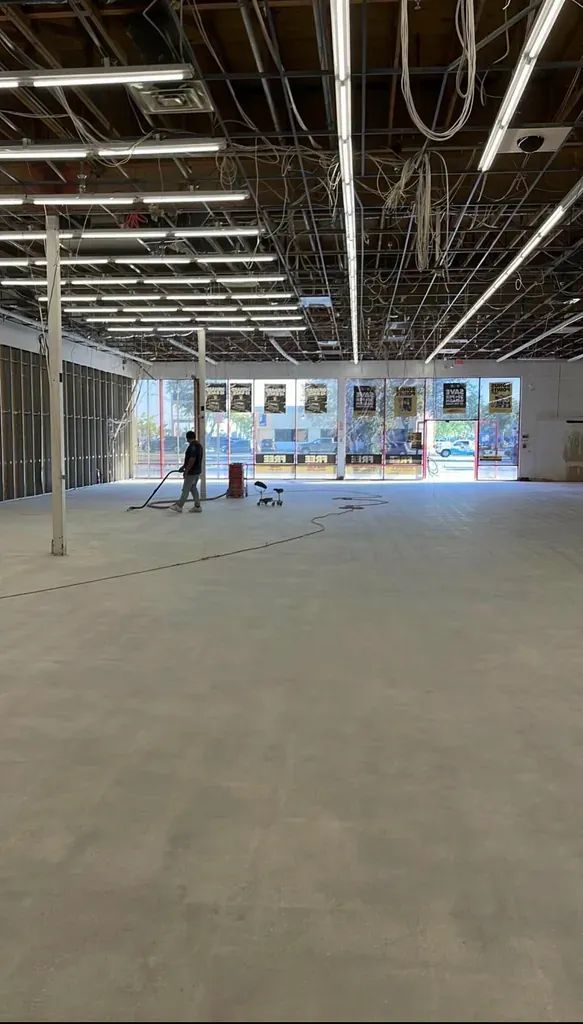
Polished concrete · Restaurant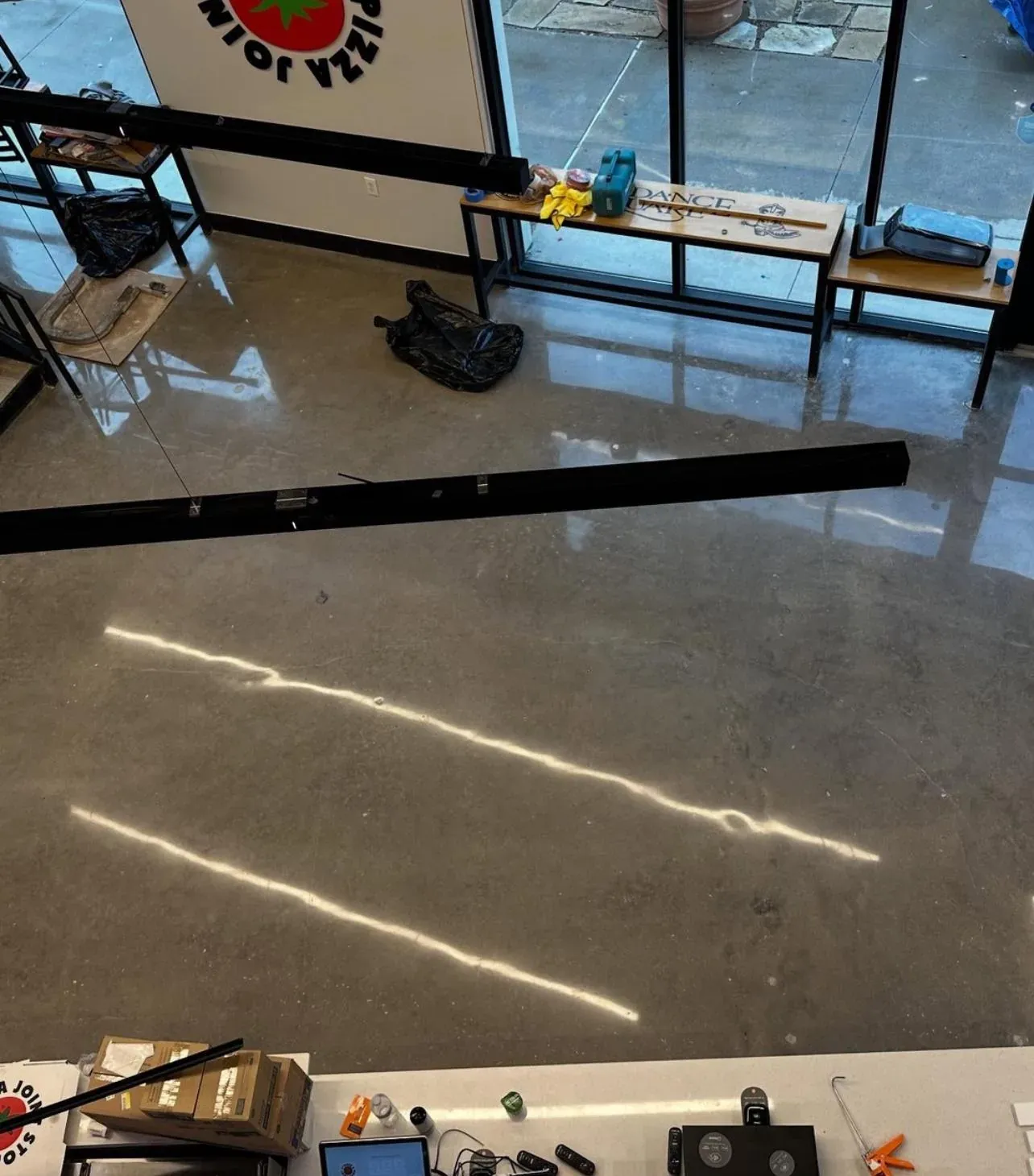 Polished concrete · Restaurant, during fit-out
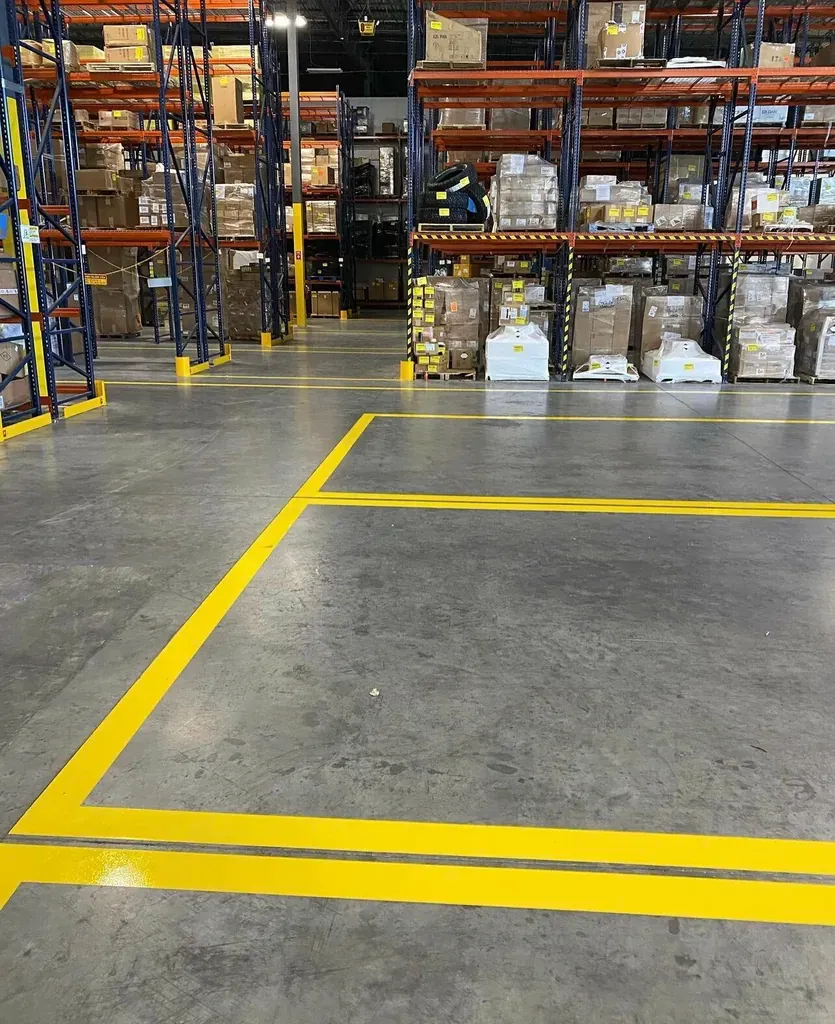 Polished concrete · Warehouse
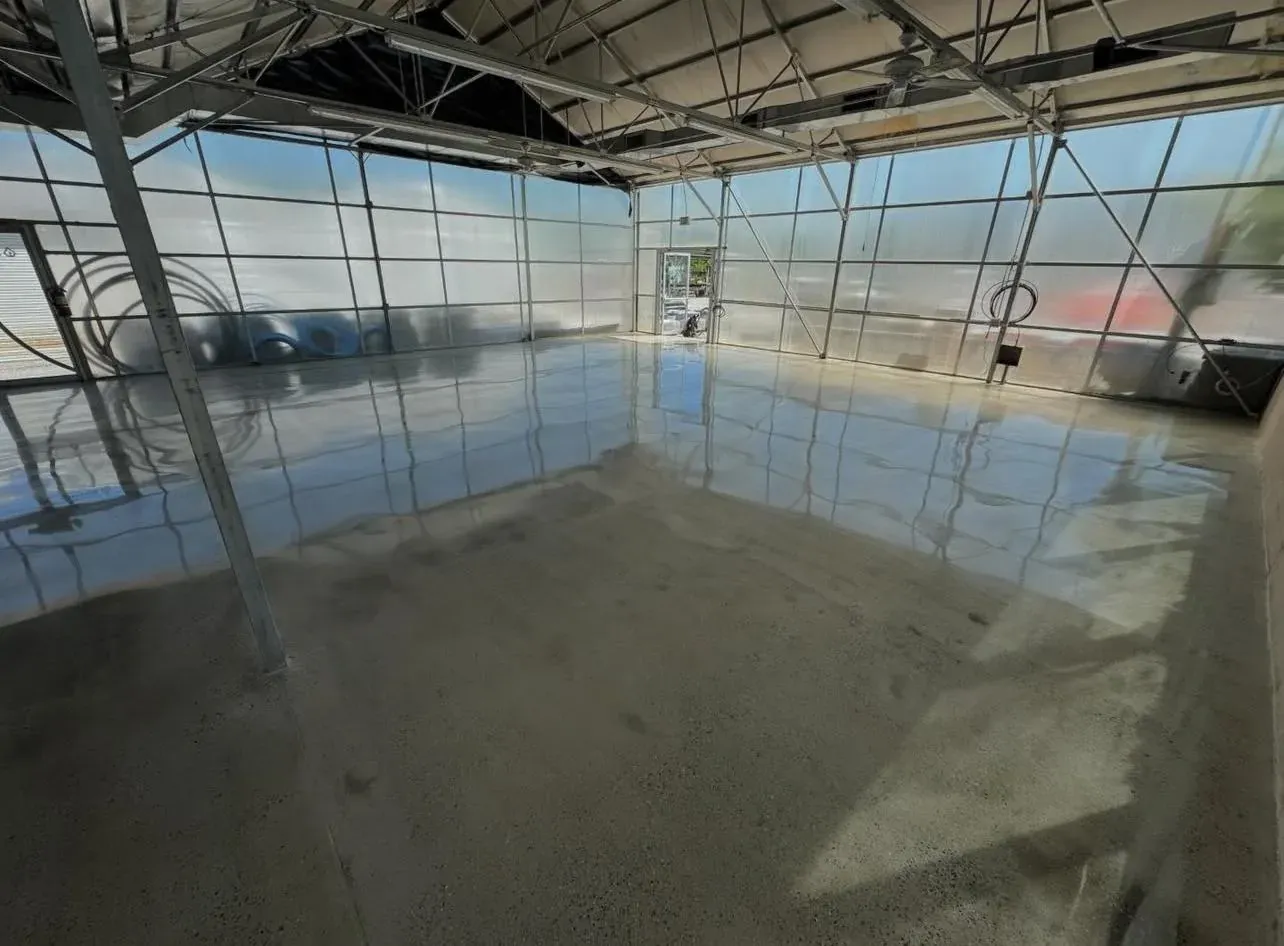 Polished concrete · Warehouse, after
 Polished concrete · Event hall
We work across Florida from our base in Weston. These cities have their own page:
Diamond honing and polishing that brings dull, scratched marble back without replacing a single tile.
Grinding, patching and re-polishing original terrazzo — common in older South Florida buildings and almost always worth saving.
A penetrating or film-forming sealer against oil, salt and water. The cheapest thing you can do to make a slab last longer.
Neither is better in general. Polished concrete has nothing on top that can peel and is very easy to maintain; epoxy adds color and design and covers a damaged slab. The right choice depends on the condition of the concrete and how the space is used.
Dry, a polished floor is not slippery. Wet, any smooth floor can be. In areas that get wet often, a satin finish and good cleaning habits help; we tell you what fits your space.
No. A slab that is badly cracked, patched in many places or too soft will not polish well. We check it on site; if polishing is not a good idea, we propose microtopping or a coating instead.
They describe how much of the stone inside the concrete shows. Cream shows almost none, salt and pepper shows small specks, and exposed aggregate shows the larger stones. The deeper we grind, the more stone you see.
A dust mop and a pH-neutral cleaner are enough day to day. Avoid acidic cleaners. When the shine wears in heavy-traffic areas, a new polishing pass brings it back without redoing the floor.

Send us photos of the concrete or book a free on-site visit. We check the slab, show you what each finish would look like and give you a price before anything is scheduled.